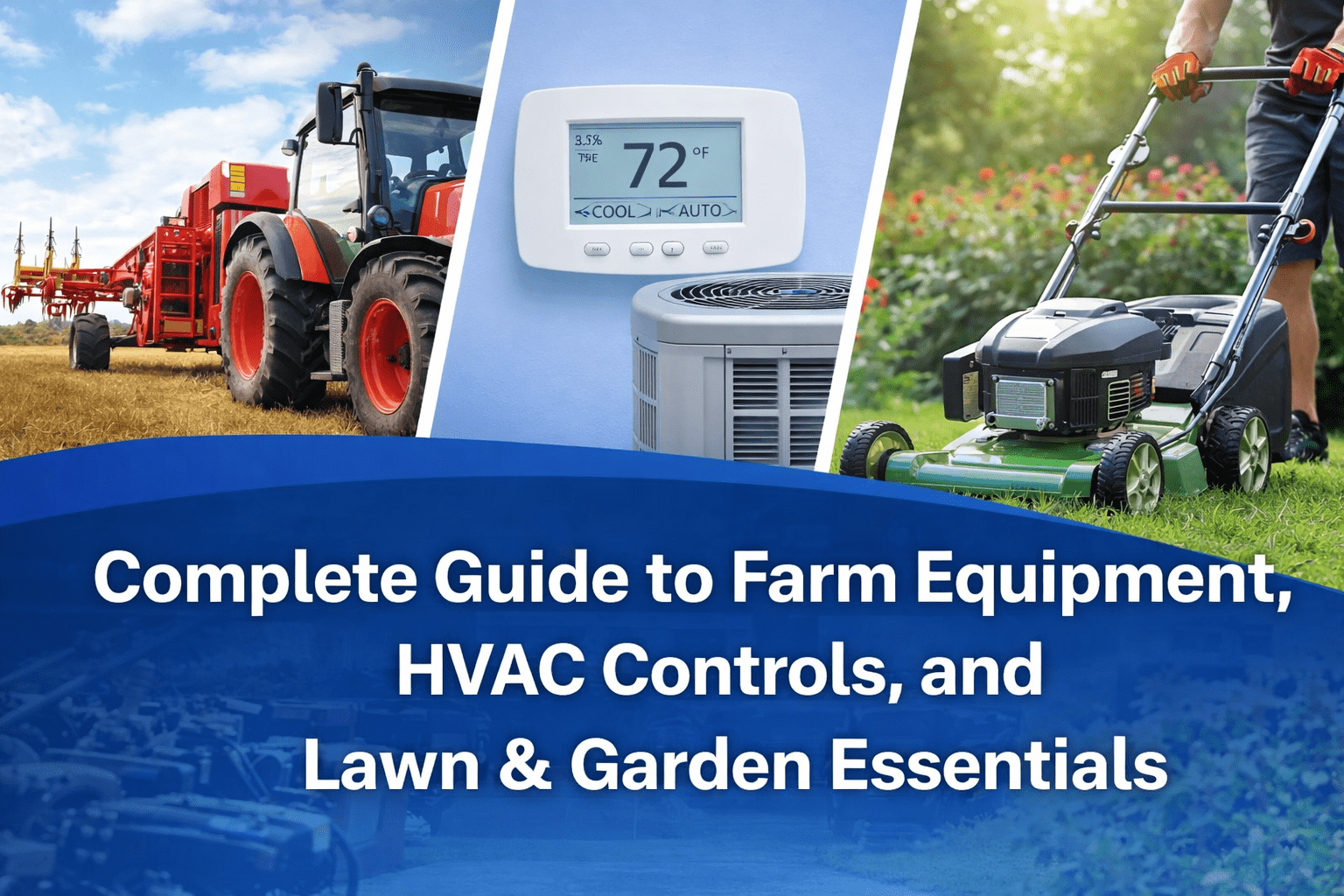
Whether you’re managing a working farm, maintaining a comfortable home environment, or cultivating a backyard garden that turns heads every spring, the tools and systems you invest in define the quality of your results. These three categories — farm equipment, HVAC controls, and lawn and garden supplies — might seem unrelated at first glance, but they share a common thread: when you get them right, everything runs smoother, costs less over time, and demands less of your energy and attention.
This guide is for the practical-minded property owner who takes pride in doing things properly. We’ll dig into what matters most in each category, how to make informed purchasing decisions, and where to find reliable products that hold up to real-world demands.
Farm Equipment: Investing in the Tools That Keep Operations Running
Farming has never been a casual endeavor. Whether you’re running a small hobby farm, a family homestead, or a larger commercial operation, the equipment you depend on directly affects your productivity, your safety, and your bottom line. The wrong piece of equipment — poorly matched to your land, your soil type, or your scale of operation — can cost you in repairs, inefficiency, and lost yield for years.
Modern farm equipment spans an enormous range of applications. Tillage equipment like plows, cultivators, and disc harrows prepares soil for planting. Planting equipment — seeders, planters, and transplanters — gets crops in the ground efficiently and at the right spacing. Harvesting equipment, irrigation systems, livestock handling tools, and material handling machinery round out a working farm’s needs. Even small-scale operations benefit from compact tractors, utility vehicles, and walk-behind equipment that make large properties manageable by a small team or even a single operator.
One of the most important considerations when sourcing farm equipment is matching the tool to the task with precision. An undersized tractor struggling against heavy clay soil wears out prematurely and leaves the operator frustrated. An oversized piece of equipment on a small plot is wasteful in fuel, storage space, and purchase cost. Talking to experienced suppliers and other farmers in your region about what works in your specific context is invaluable research before any major equipment purchase.
Maintenance culture separates thriving farm operations from struggling ones. Equipment that gets greased, cleaned, and serviced on schedule lasts dramatically longer than equipment that runs until it fails. Building a simple maintenance calendar — tied to hours of use rather than just calendar time — and sticking to it pays off in reduced repair bills and equipment that’s ready when you need it most. Planting season and harvest season are not the times you want to discover a neglected bearing or a cracked hydraulic line.
For those actively building or upgrading their farm operations, exploring a well-stocked selection of Farm Equipment from reputable suppliers ensures you’re looking at products designed to perform under agricultural demands rather than consumer-grade alternatives that look similar but fall short under sustained use. Quality sourcing matters enormously in this category, where equipment failure doesn’t just mean inconvenience — it means lost time during windows that can’t be recovered.
Safety training and equipment familiarity also deserve emphasis here. Farm equipment accounts for a significant share of serious workplace injuries each year, and the majority of those incidents are preventable. Before operating any unfamiliar piece of equipment, read the manual thoroughly, walk through the controls with someone experienced, and never bypass safety interlocks or guards. Protective equipment — including hearing protection around loud machinery and appropriate footwear — should be non-negotiable on any working farm.
HVAC Controls: The Quiet Technology That Manages Your Comfort and Costs
Most homeowners interact with their HVAC system twice a day — when they glance at the thermostat — and don’t give it much thought beyond that. But the control systems governing your heating, ventilation, and air conditioning have evolved dramatically over the past decade, and understanding your options can lead to meaningful improvements in comfort, energy efficiency, and long-term cost savings.
At its most basic, an HVAC control system regulates when your heating and cooling equipment runs, how long it runs, and under what conditions it cycles on and off. But modern systems do far more than simple on/off switching. Programmable thermostats allow you to set different temperature schedules for different times of day and days of the week, automatically reducing energy use during hours when a building is unoccupied or when occupants are asleep. Smart thermostats go further still, learning household patterns over time and adjusting automatically to optimize both comfort and efficiency.
Zone control systems represent another significant leap forward. Rather than heating or cooling an entire building uniformly, zoned systems divide a structure into independently controlled areas. A bedroom wing can be kept cooler overnight while living areas maintain daytime temperatures. A home office can be comfortable during work hours without conditioning the entire house. For larger homes, commercial spaces, or buildings with unusual layouts that create uneven temperature distribution, zoning is often the single most impactful upgrade available.
Sensor technology has also advanced considerably. Modern HVAC controls can incorporate occupancy sensors that detect whether a room is in use, humidity sensors that manage moisture levels independently of temperature, and air quality monitors that trigger ventilation when CO2 levels or particulate counts rise. These integrations move HVAC control from simple comfort management into genuine indoor environment management — a meaningful distinction for households with allergy sufferers, young children, or elderly occupants.
For contractors, building managers, and homeowners upgrading aging systems, sourcing quality HVAC Controls from knowledgeable suppliers ensures compatibility with existing equipment and access to products that meet current efficiency and safety standards. This is a category where cutting corners on component quality creates problems that are expensive and disruptive to diagnose and repair. A failed control board in a commercial building on a July afternoon is nobody’s idea of a manageable situation.
Installation and commissioning of HVAC controls should be handled by qualified technicians whenever the work involves electrical connections, refrigerant systems, or commercial-scale equipment. For straightforward residential thermostat replacements, many competent homeowners can handle the swap themselves — but when in doubt, professional installation protects both the equipment warranty and the safety of the building’s occupants.
Energy audits provide useful context before investing in HVAC control upgrades. Understanding where a building loses heat in winter or gains it in summer helps prioritize where control improvements will have the greatest impact. Sometimes better insulation or window sealing delivers more comfort improvement per dollar than upgraded controls — and sometimes the opposite is true. A clear-eyed assessment before spending guides better decisions.
Lawn and Garden: Cultivating Beauty and Productivity in Your Outdoor Space
There’s something deeply satisfying about a well-maintained outdoor space. Whether your vision is a manicured lawn that provides a clean backdrop for family gatherings, a productive vegetable garden that cuts your grocery bill and connects you to your food, or a thoughtfully landscaped yard that blends native plants with intentional design, the path to getting there runs through the right knowledge and the right supplies.
Soil health is where all successful gardening begins. Before purchasing a single plant or seed, understand what you’re working with. A basic soil test — inexpensive and widely available through cooperative extension services — tells you your soil’s pH, nutrient levels, and organic matter content. This information guides decisions about amendments, fertilizers, and what plants will thrive in your specific conditions without constant struggle. Gardeners who skip this step often spend years treating symptoms rather than addressing the underlying cause of poor plant performance.
Irrigation deserves thoughtful planning, particularly in regions experiencing increasing summer heat and water restrictions. Drip irrigation systems deliver water directly to root zones, dramatically reducing waste compared to overhead sprinklers while also keeping foliage dry — which reduces fungal disease pressure on vegetables and ornamentals alike. Soaker hoses serve a similar function at a lower cost for smaller beds. Pairing irrigation with a timer or smart controller moves your watering system from a chore into an automated background process.
Lawn care equipment selection should match the scale and terrain of your property. A reel mower is quiet, environmentally friendly, and produces a beautiful cut — but only suits smaller, flat lawns with relatively fine grass types. A walk-behind gas or battery mower handles most residential properties effectively. Larger properties benefit from riding mowers or zero-turn equipment that covers ground quickly and reduces operator fatigue over multi-hour mowing sessions.
Beyond mowing, a complete lawn care program addresses fertilization, aeration, overseeding, weed management, and seasonal preparation. Spring and fall are the most important periods for cool-season grasses, while warm-season varieties like Bermuda and Zoysia respond best to summer feeding and renovation. Understanding your grass type shapes your entire care calendar and prevents the common mistake of applying the right products at the wrong time.
For garden beds, consistent mulching is one of the highest-return-on-effort practices available. A three-inch layer of organic mulch suppresses weeds, retains soil moisture, moderates soil temperature, and breaks down over time to improve soil structure. Homeowners who mulch consistently spend less time dramatically weeding and watering while producing noticeably healthier plants.
Finding quality supplies for outdoor projects is straightforward when you know where to look. A well-stocked Lawn and Garden department gives you access to everything from hand tools and soil amendments to power equipment and irrigation components — all in one place, saving the time and frustration of piecing together supplies from multiple sources.
Seasonal timing matters throughout the gardening year. Starting seeds too early indoors leads to leggy, root-bound transplants that struggle after planting. Setting out warm-season vegetables before nighttime temperatures consistently exceed 50°F invites setbacks from cold stress. Paying attention to your local frost dates, soil temperatures, and the specific requirements of what you’re growing turns gardening from a guessing game into a reliable, repeatable process.
Bringing It All Together: The Property Owner’s Mindset
What farm equipment, HVAC controls, and lawn and garden supplies have in common is that they all reward the same approach: informed purchasing, quality over false economy, consistent maintenance, and attention to the specific conditions of your property rather than generic advice.
The property owner who takes time to understand their soil, their climate, their building’s energy profile, and their operational needs before spending money consistently gets better results than one who buys impulsively based on price alone. That approach applies whether you’re selecting a tractor for a working farm, upgrading a commercial building’s control system, or building a backyard garden that feeds your family through the summer.
Invest in quality where it matters. Maintain what you own. And source your supplies from suppliers who know their products well enough to guide you toward the right choices.