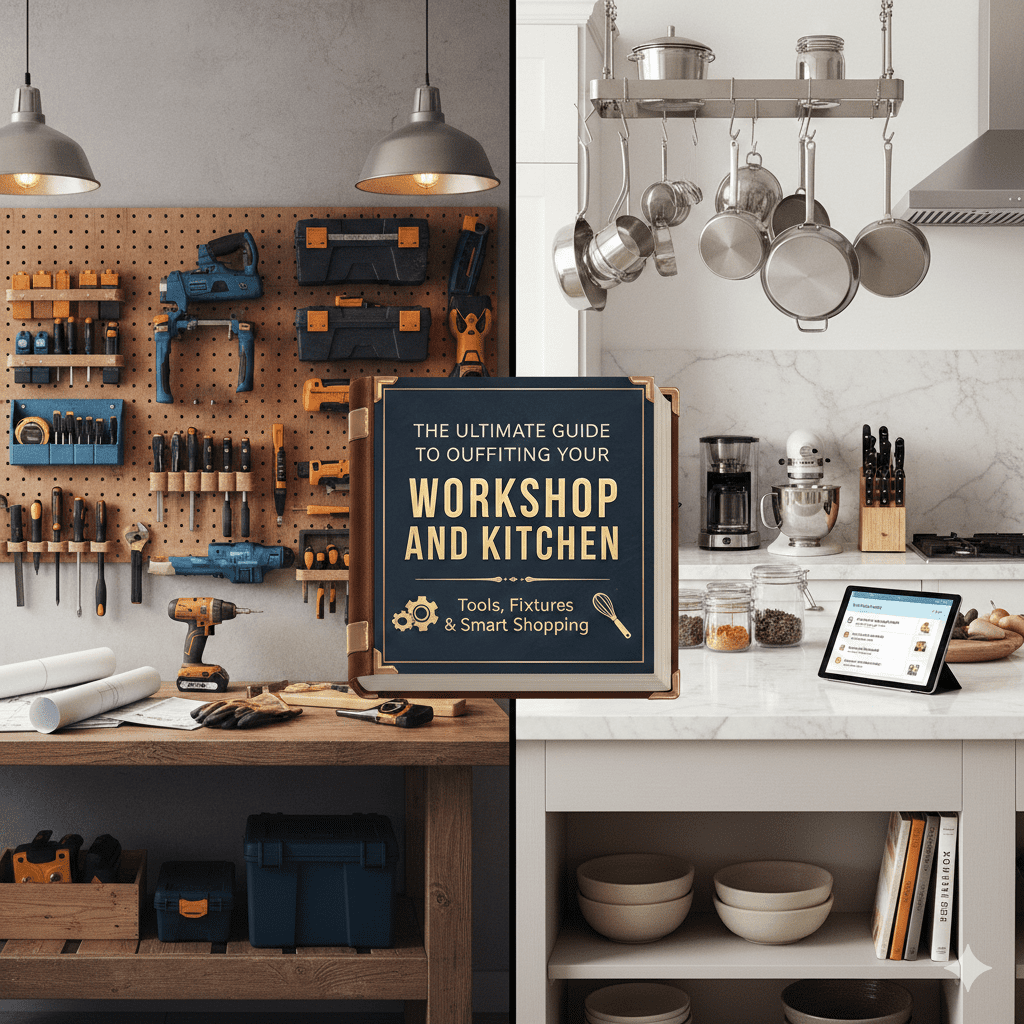
Whether you’re a seasoned woodworker, a weekend DIY enthusiast, or a homeowner finally tackling that kitchen renovation you’ve been putting off for three years, building the right toolkit and choosing the right fixtures can make or break your project. The difference between a frustrating weekend of stripped screws and warped panels versus a smooth, satisfying build often comes down to preparation — knowing what you need, where to source it, and how to use it well.
This guide walks you through the essentials: from stocking a functional workshop with quality tools to selecting cabinet fixtures that pull a space together both functionally and aesthetically.
Start With the Right Foundation: Understanding Your Project Needs
Before you walk into any hardware store or click “add to cart,” take a breath and think through your project holistically. Too many DIYers make the mistake of buying tools reactively — grabbing whatever seems relevant in the moment — and end up with a cluttered garage full of redundant equipment and none of the specialty items they actually need.
Ask yourself a few key questions. Are you working primarily with wood, metal, drywall, or a combination? Are you doing one large project or planning to build a workshop habit over the next several years? Is this a cosmetic renovation or a structural one? Your answers will determine whether you need a comprehensive tool collection or a targeted set of specialty items.
For most home improvement projects — particularly kitchen renovations, bathroom upgrades, or garage workshop builds — you’re going to need two broad categories of equipment: hand tools for precision and control, and power tools for efficiency and heavy lifting.
Hand Tools: The Backbone of Any Serious Build
There’s a reason experienced craftspeople never abandon their hand tools even after investing thousands in power equipment. Hand tools offer a tactile feedback that power tools simply can’t replicate. When you’re fitting a cabinet door, fine-tuning a joint, or marking a precise cut line, your hands are your most reliable instruments.
A solid hand tool collection should include, at minimum, a quality hammer, a set of chisels, marking gauges, a reliable tape measure, a combination square, a handsaw, and an assortment of screwdrivers. Beyond those basics, you’ll find yourself reaching for items like a block plane, a mallet, a utility knife, and a set of clamps far more often than you might expect.
Investing in a reputable source matters here. Browsing through a well-curated selection of hand and power tools gives you access to professional-grade equipment that stands up to repeated use. Consumer-grade tools from big-box stores often feel adequate for a single project but begin to show wear quickly — handles loosen, blades dull faster, and measuring tools lose their calibration. When you’re spending time on a project you care about, your tools should be the last thing causing problems.
One often-overlooked hand tool is the card scraper. Simple in design and inexpensive to buy, a well-tuned card scraper can produce a glass-smooth wood surface without sandpaper. Woodworkers who discover this tool often wonder how they managed without it for so long.
Power Tools: Working Smarter, Not Just Harder
If hand tools are the backbone, power tools are the muscle. A circular saw, a drill/driver combo, a random orbital sander, and a jigsaw will handle the vast majority of tasks in a home workshop. As your projects grow more ambitious, you might add a miter saw for precise angle cuts, a router for edge profiles and joinery, or a belt sander for material removal.
The key to smart power tool investment is buying quality where it counts and not overspending where it doesn’t. A professional-grade drill is worth every penny — you’ll use it constantly, and a cheap model will wear out a motor at the worst possible moment. On the other hand, a basic jigsaw from a reliable brand will serve most hobbyists just fine without requiring a premium model.
Battery platform compatibility has become a major consideration in recent years. If you invest in one manufacturer’s battery ecosystem, your batteries and chargers become interchangeable across their entire tool lineup. This saves significant money over time and reduces the clutter of multiple charging systems in your workspace. For anyone serious about building a functional workshop, exploring a comprehensive selection of Hand And Power Tools from trusted sources lets you compare options and make informed decisions before committing.
Safety deserves its own paragraph here. Power tools demand respect. Always wear appropriate eye protection and hearing protection when operating power equipment. Keep blades sharp — dull blades require more force, which increases the likelihood of kickback and loss of control. And never, ever bypass a tool’s safety guards. These aren’t suggestions; they’re the habits that keep experienced craftspeople working into their seventies without incident.
Cabinet Fixtures: Where Function Meets Style
Now let’s talk about one of the most impactful and often underestimated aspects of any kitchen or cabinetry project: the fixtures. Hinges, drawer slides, handles, pulls, and organizational hardware collectively determine how your cabinetry functions every single day. A beautiful cabinet with cheap, poorly fitted hardware will feel frustrating within weeks. Well-chosen fixtures, on the other hand, can elevate a modest cabinet to feel custom and high-end.
Hinges are the unsung heroes of cabinet construction. Concealed European hinges have become the industry standard for good reason — they’re adjustable in three dimensions, allow doors to open wide without obstruction, and remain completely hidden when the door is closed. For face-frame cabinets, you’ll also encounter inset and overlay configurations, each requiring specific hinge types. Take time to understand your cabinet construction before purchasing.
Drawer slides deserve equal attention. Full-extension undermount slides are the premium option for kitchen drawers, allowing complete access to drawer contents and providing a smooth, dampened close. Side-mount slides are more economical and work well in utility or garage contexts where aesthetics matter less than durability.
Pulls and handles are where personality enters the equation. From sleek brushed nickel bars to vintage brass bin pulls, the hardware you choose anchors the visual identity of the entire room. A farmhouse kitchen calls for something different than a minimalist modern space, and the wrong choice — even in a subtle way — can make a beautifully designed room feel slightly off without anyone being able to articulate why.
For anyone deep in a cabinet renovation or new installation, spending time browsing quality Cabinet Fixtures pays dividends. The variety available — in terms of finish, style, material, and function — means there’s no excuse for settling. Soft-close mechanisms, for instance, are now available at price points accessible to most budgets, and once you’ve experienced a kitchen without slamming cabinet doors, there’s no going back.
Thinking About Workflow: Tool Organization and Shop Setup
A well-organized workspace is a productivity multiplier. Woodworkers and contractors who take the time to set up their shop thoughtfully — with tools stored at accessible heights, frequently used items within arm’s reach, and clear dedicated zones for cutting, assembly, and finishing — consistently produce better work in less time.
A French cleat system on a workshop wall costs relatively little to build but offers near-infinite flexibility for tool storage. Pegboard remains a classic for good reason. A simple rolling cart can house your most-used power tools while keeping them mobile across a workspace. Whatever system you choose, commit to returning tools to their designated spots after every use. The habit takes effort to build but pays back constantly.
Lighting is another underrated shop element. Shadows cause measurement errors and make fine work genuinely harder. LED shop lights are inexpensive, energy-efficient, and dramatically improve the quality of a workspace. If you’re planning a shop build or renovation, prioritize lighting before aesthetics every time.
Buying Smart: Quality, Warranty, and Long-Term Value
The cheapest tool is rarely the least expensive over time. A hammer that lasts thirty years and feels balanced in your hand on day one is a better investment than three cheap hammers over the same period — and the experience of using good tools consistently is simply more satisfying.
That said, “quality” doesn’t always mean the most expensive option. Research specific models, read reviews from actual users doing the kind of work you plan to do, and pay attention to warranty terms. Brands that stand behind their products with strong warranties signal confidence in their manufacturing — and protect you if something goes wrong.
Local and specialty suppliers often stock items you won’t find at national chains, and their staff typically bring genuine knowledge to purchasing conversations. Whether you’re tracking down a specific drawer slide system or a set of specialty chisels, working with knowledgeable suppliers saves time and prevents costly mistakes.
Final Thoughts
A well-equipped workshop and thoughtfully finished cabinetry aren’t luxuries — they’re investments in your home, your time, and the quality of the work you’re able to produce. Start with the fundamentals, buy quality where it matters, and don’t underestimate the impact of good fixtures on a finished space.
Whether you’re just beginning to build your tool collection or refinishing cabinets in a house you’ve owned for a decade, the resources and products available today make it easier than ever to do the job right the first time.