
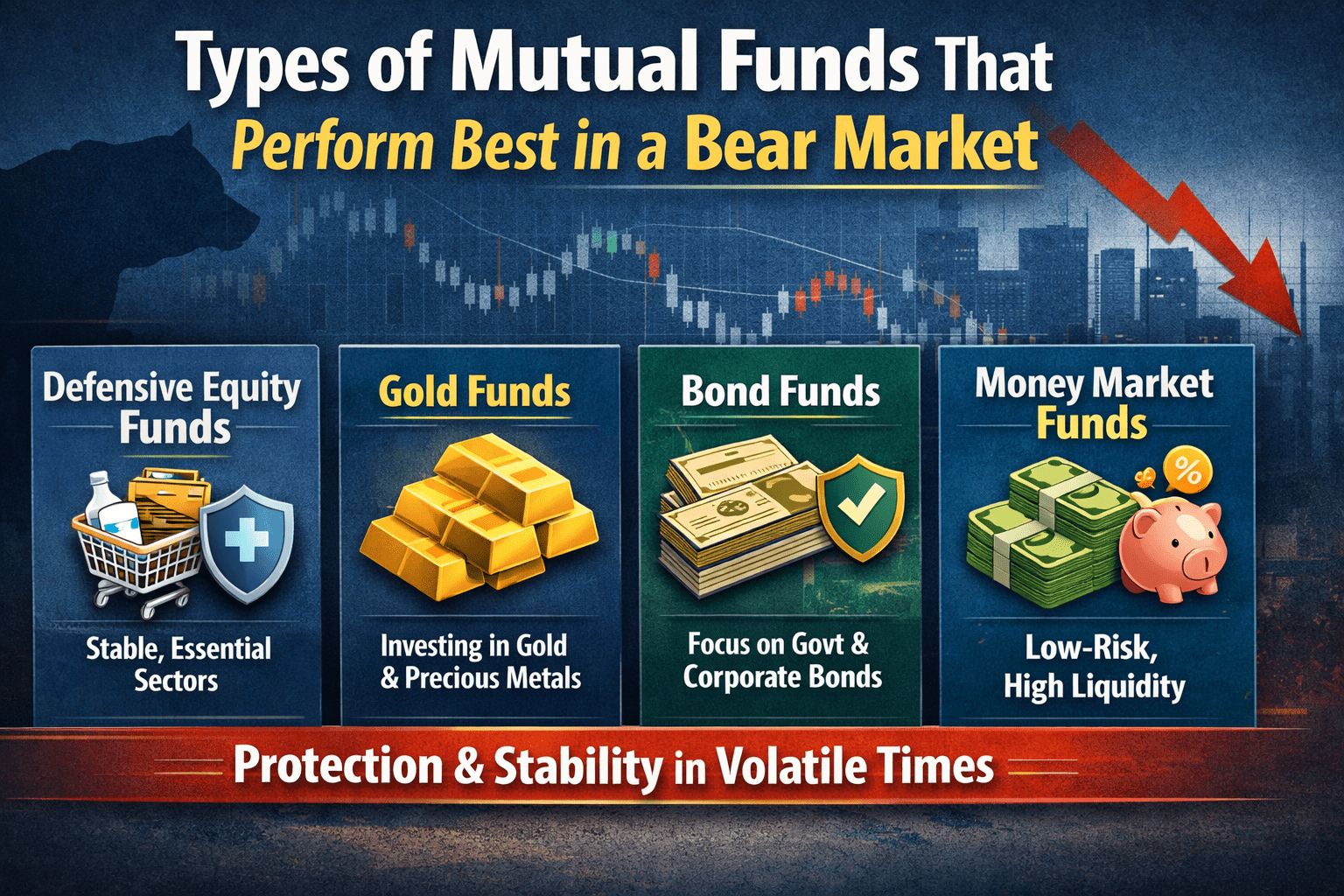
When stock prices go down for a long time, that’s a bear market. During this time, many investors lose money on their portfolios. It can be hard to figure out what to do.
But not all investments go down the same way. Some mutual funds are better than others at handling market drops. These funds are all about assets that are stable, make money, or have low risk.
Knowing which mutual funds do better in a bear market can help investors keep their money safe. You can also stay informed about financial leadership trends like the longest serving finance minister of India till 2026 to understand economic stability over time.
What Is a Bear Market?
A bear market is when stock prices fall 20% or more from their most recent highs. It usually happens because of problems with the economy, rising interest rates, or uncertainty around the world.
Right now:
- Stocks’ prices go down.
- Investors are careful
- The market gets more unstable.
A lot of equity funds do badly when the market is down. On the other hand, types of mutual funds are better at getting through these hard times.
1. Mutual Funds for Debt
Debt mutual funds mostly invest in fixed-income securities like government bonds, corporate bonds, and treasury bills.
The stock market doesn’t affect these funds as much. Because of this, prices don’t usually go up or down as much during a bear market.
Here are some of the most important benefits:
- Not as risky as equity funds
- Returns that stay the same more often
- Regular payments of interest
There are two kinds of debt funds that might do well: short-term bond funds and government bond funds.
2. Funds that are balanced or mixed
Balanced funds invest in both stocks and bonds. They can stop losing money when the stock market goes down because they don’t only invest in stocks.
The bond part of the fund helps to spread out the risk when the market is unstable.
These are the benefits of balanced funds:
- Investments that are spread out
- Not as volatile as funds that only invest in stocks
- Possible moderate growth and income
These funds are supposed to be stable, but they still let you invest in stocks.
3. Funds that pay dividends
Funds that focus on dividend yield look for companies that pay dividends on a regular basis and at a high rate.
Companies that pay good dividends are usually well-known and make money all the time. When the market goes down, these companies might do better.
Here are some of the good things about dividend funds:
- Dividends are a way to get money on a regular basis.
- Putting money into businesses that are stable
- Not as volatile as growth stocks
Investors may still get dividends even if the price of stocks goes down.
4. Money for Gold
Many people think that gold is a safe place to store their money. When the economy is unstable or the stock market goes down, investors sometimes put their money into gold.
Gold mutual funds invest in gold or things that are linked to gold. Gold can help lower the overall risk of a portfolio because it doesn’t always move in the same way as stocks.
Here are some of the main reasons why investors choose gold funds:
- Keep yourself safe from market drops
- Safety when the economy is unstable
- Adding different types of investments to your portfolio
Gold funds may do better when the stock market is weak.
5. Funds that are defensive or have low volatility
Some mutual funds put money into companies that are less affected by bad economies. These funds invest in safe things like healthcare, utilities, and everyday items.
Even when times are tough, these businesses provide people with goods and services that they need.
Some things that are common are:
- Consistent income
- Prices change less
- A steady need for things
These companies are more stable, so their stock prices may not drop as much during a bear market.
Why it’s important to have a variety of things
No one mutual fund can keep investors safe from a market downturn. The reason that you need to diversify your investments comes from the need to protect your financial resources.
A portfolio that is well-balanced might have:
- Long-term growth is achieved through equity funds.
- Debt funds provide protection against market fluctuations.
- Gold functions as a protective measure.
- Dividend funds provide investors with regular income payments.
The practice of investing in multiple fund types serves as a safeguard against potential financial losses.
Last Thoughts
Bear markets occur during all investment periods because they represent common market conditions. Investors face difficulties during these periods yet they present opportunities to assess and enhance their investment strategies.
The performance of mutual funds which include debt funds balanced funds dividend yield funds gold funds and defensive funds will increase during market downturns. The funds main objectives include achieving financial growth while maintaining stability and reducing their investment risks.
By choosing the right mix of mutual funds, investors can better protect their portfolios and stay confident even when the markets go down.