Computer programming is a core part of many Australian university degrees, including IT, computer science, engineering, and data science. While learning to code is exciting, completing a programming task within academic guidelines can be challenging. Tight deadlines, unfamiliar languages, logical errors, and strict marking rubrics often make students feel overwhelmed. Understanding a structured approach can significantly improve both confidence and grades when working on a computer programming assignment.
This guide explains practical, student-friendly steps to help you complete programming assignments successfully while meeting Australian university expectations.
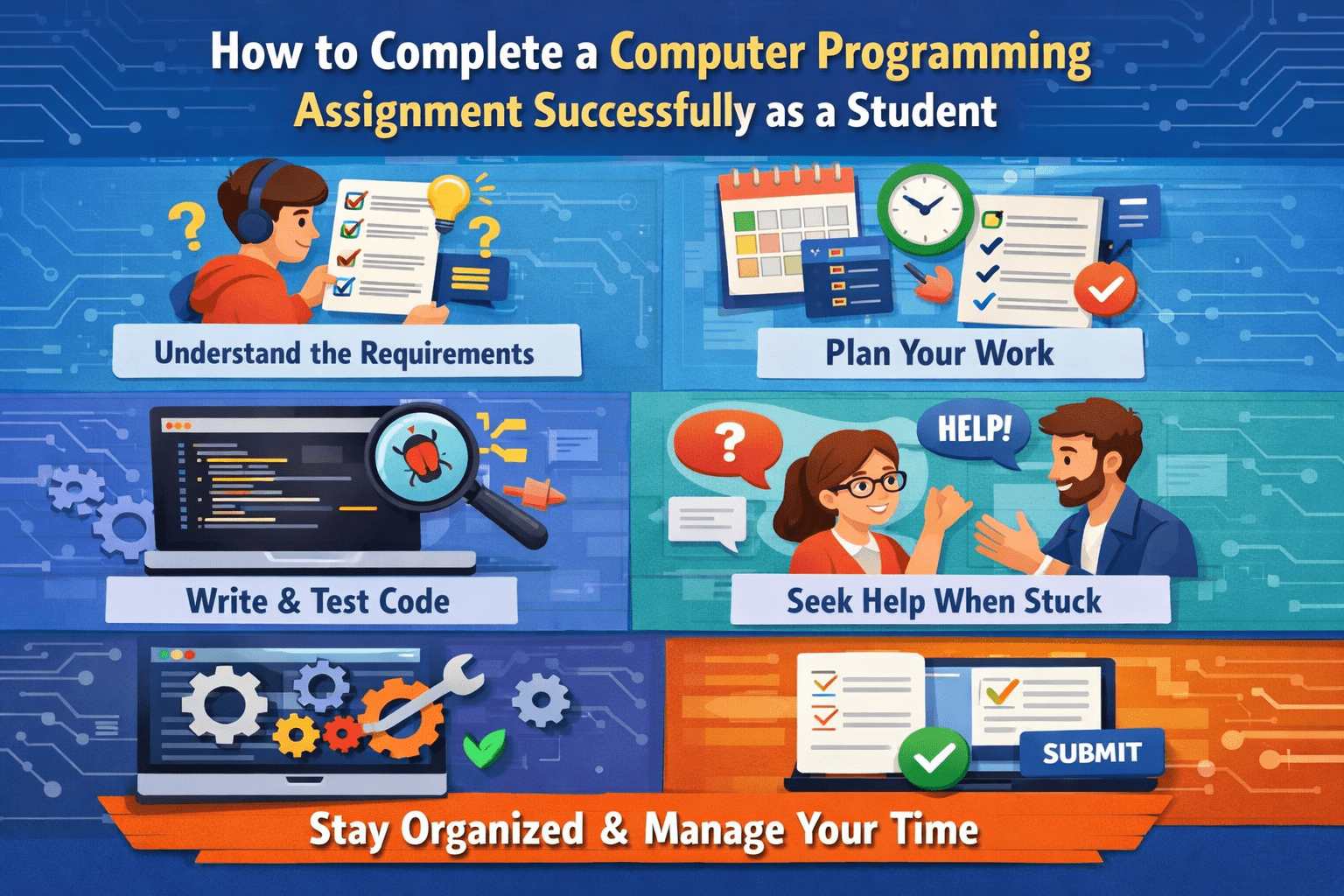
Understand the Assignment Requirements Clearly
The first and most important step is carefully reading the assignment brief. Many students lose marks not due to poor coding but because they misunderstand the task.
Focus on:
- The problem statement
- Required programming language or framework
- Input and output format
- Marking criteria and submission guidelines
- Deadline and file structure requirements
Australian universities often assess not just correctness but also code readability, documentation, and efficiency, making computer programming assignment help valuable when clarifying expectations early and reducing the need for last-minute fixes or external online assignment help.
Break the Problem into Smaller Tasks
Programming assignments become manageable when divided into smaller components. Instead of trying to write the full program at once, break it down logically.
For example:
- Identify required functions or modules
- Define variables and data structures
- Write pseudocode before actual coding
- Implement features step by step
This approach helps you detect errors early and reduces debugging time. It also aligns well with structured coding practices taught across Australian institutions.
Choose the Right Tools and Environment
Using the correct development environment is crucial. Universities usually recommend or require specific tools.
Commonly used tools include:
- IDEs like Visual Studio Code, PyCharm, or Eclipse
- Version control systems such as Git
- University-provided virtual labs or servers
Working in the right environment ensures compatibility during submission and avoids unnecessary technical issues that may lead students to seek assignment help online close to deadlines.
Write Clean and Readable Code
Well-written code is easier to understand, debug, and grade. Australian universities place strong emphasis on professional coding standards.
Best practices include:
- Meaningful variable and function names
- Consistent indentation and formatting
- Proper comments explaining logic
- Avoiding redundant or repeated code
Clean code demonstrates strong conceptual understanding and reduces the likelihood of penalties for poor structure, even if the logic is correct.
Test Your Program Thoroughly
Testing is a step students often overlook. Running the program only once is rarely sufficient.
Ensure you:
- Test with different inputs (including edge cases)
- Handle invalid or unexpected input gracefully
- Compare outputs with expected results
- Fix runtime and logical errors
Systematic testing improves reliability and reduces the need for last-minute assignment writing service from external sources.
Document Your Work Properly
Documentation is just as important as the code itself. Most Australian universities require students to submit reports or explanations along with the program.
Include:
- A brief explanation of the solution approach
- Description of algorithms used
- Assumptions made
- Limitations or challenges faced
Good documentation shows your understanding and helps examiners follow your logic, especially when evaluating complex programs.
Manage Your Time Effectively
Time management is critical for programming tasks. Many students underestimate the time needed for debugging and testing.
A smart timeline could look like:
- 20% understanding the problem
- 40% coding and implementation
- 25% testing and debugging
- 15% documentation and final review
Leaving buffer time reduces stress and limits dependency on last-minute australia assignment help services.
Use Academic Support and Resources
Australian universities provide multiple academic resources designed to help students succeed independently.
These include:
- Programming labs and workshops
- Tutor consultation hours
- Peer study groups
- Online learning portals
Using these resources early can reduce confusion and strengthen foundational skills, minimizing the need for external computer assignment help.
When to Seek External Guidance Responsibly
Sometimes, despite best efforts, students may struggle due to complex logic, overlapping deadlines, or limited experience. In such cases, guidance from a computer assignment help service or a computer assignment help expert can be useful, provided it is used ethically.
Responsible use includes:
- Seeking explanations, not copied code
- Using samples for learning purposes
- Ensuring all submissions are original
- Following university academic integrity policies
In Australia, maintaining academic honesty is essential, and penalties for violations can be severe.
Final Review Before Submission
Before submitting your assignment:
- Re-read the assignment brief
- Check formatting and file naming
- Run the program one final time
- Proofread documentation
- Ensure originality
A careful final review often makes the difference between an average and a high-scoring submission.
Summing Up
Successfully completing a programming task is not just about writing code; it’s about understanding requirements, planning logically, writing clean programs, and managing time effectively, where computer assignment help can support learning when used responsibly. By following a structured approach and using available academic resources wisely, Australian university students can confidently complete even complex programming tasks while building valuable technical skills for the future.
Frequently Asked Questions…
- Why do students find programming assignments difficult?
Programming requires logical thinking, problem-solving, and language syntax knowledge. Many students struggle when these skills are still developing.
- How early should I start a programming assignment?
Ideally, start as soon as it is assigned. Early starts allow time for learning, testing, and improvement.
- Are online resources helpful for programming assignments?
Yes, tutorials, documentation, and practice platforms are useful when used for learning rather than copying.
- What mistakes should I avoid in programming assignments?
Common mistakes include poor time management, lack of testing, ignoring documentation, and misunderstanding requirements.
- Can external guidance improve my understanding?
Yes, when used ethically, expert guidance can clarify concepts and improve problem-solving skills without violating academic integrity.